
Articles
Every article published in Augmented Medicine, newest first. The entries below are demo articles that show the design, with illustrative dates; the first articles of Volume 1 will replace them.
Results
Deployed clinical AI needs a denominator: a minimum dataset for monitoring after deployment
Clinical AI systems are approved and bought on the strength of accuracy figures from development data, and then deployed into settings where almost nothing about their use is measured. Hospitals rarely know what share of eligible patients a model scored, how many alerts it raised, how often clinicians acted on them, or whether its predictions stayed accurate as patients, practice and data changed. We argue that every deployed clinical AI system should report a small set of measures with explicit denominators, covering exposure, output, use, performance, equity, safety and change, and we propose a minimum dataset. We discuss who should collect it, how outcomes contaminated by the model's own effect should be handled, and why the burden is smaller than the cost of not knowing.
Abstract: Deployed clinical AI needs a denominator: a minimum dataset for monitoring after deploymentPDF: Deployed clinical AI needs a denominator: a minimum dataset for monitoring after deploymentReferences: Deployed clinical AI needs a denominator: a minimum dataset for monitoring after deployment
Large language model drafts of replies to patient portal messages in primary care: a blinded comparison with clinicians' replies
Background. Health systems are adopting large language models (LLMs) to draft replies to patient portal messages, but evidence on the safety of the drafts, as opposed to their tone, is limited. We compared LLM drafts with the replies that clinicians actually sent. Methods. We randomly sampled 480 patient messages sent to three primary care clinics between January 6 and March 28, 2026. For each, a locally hosted open-weight LLM produced a draft from the message and a snapshot of the chart at the time it was sent. Six primary care physicians, blinded to source, rated each draft and the clinician's reply for potential for harm (primary outcome), accuracy, completeness and empathy, and classified errors. Comparisons were paired by message. Results. Potential for harm was found in 37 of 480 drafts (7.7%) and 14 of 480 clinician replies (2.9%), a difference of 4.8 percentage points (95% CI 2.0 to 7.6). Six drafts (1.3%) and two replies (0.4%) had potential for severe harm. Harm was concentrated in messages about symptoms (16.1% of drafts against 5.1% of replies), and drafts did not advise urgent assessment for 11 of 23 messages that described red-flag symptoms. Drafts were rated more complete (mean 4.4 against 3.6 on a 5-point scale) and more empathetic (4.5 against 3.4) but slightly less accurate (4.1 against 4.3), and were preferred in 281 of 480 comparisons (58.5%). Fabricated content appeared in 21 drafts (4.4%). Conclusions. LLM drafts were preferred for their completeness and tone but carried more potential for harm than clinicians' replies, mainly through missed escalation of symptoms. Drafts for symptom messages need safeguards beyond clinician review.
Abstract: Large language model drafts of replies to patient portal messages in primary care: a blinded comparison with clinicians' repliesPDF: Large language model drafts of replies to patient portal messages in primary care: a blinded comparison with clinicians' repliesReferences: Large language model drafts of replies to patient portal messages in primary care: a blinded comparison with clinicians' replies
External validation of machine learning models for predicting acute kidney injury in hospitalized adults: a systematic review and meta-analysis
Background. Many machine learning models predict acute kidney injury (AKI) in hospitalized adults, but their performance outside the data used to develop them is unclear. We systematically reviewed external validations of these models. Methods. We searched MEDLINE, Embase, Web of Science and IEEE Xplore from January 2012 to March 2026 for external validations of machine learning models that predict AKI, defined by Kidney Disease: Improving Global Outcomes (KDIGO) criteria, in hospitalized adults. Two reviewers independently selected studies, extracted data and assessed risk of bias with PROBAST+AI. We pooled the area under the receiver operating characteristic curve (AUROC) on the logit scale with random-effects meta-analysis and Hartung-Knapp confidence intervals, and calculated 95% prediction intervals. Results. We included 34 studies reporting 52 external validations of 27 models. Risk of bias was high in 41 validations (78.8%), mainly because of the analysis. Calibration was reported in 14 validations (26.9%) and performance by race or ethnicity in 9 (17.3%). In 38 validations with sufficient data, the pooled AUROC for AKI of any stage was 0.78 (95% CI 0.75 to 0.81), with a 95% prediction interval of 0.64 to 0.88. The pooled AUROC was 0.76 (0.72 to 0.80) in a different health system and 0.82 (0.79 to 0.85) in the same health system at a later period. Where both were reported, the AUROC fell by a median of 0.06 from development to external validation. Conclusions. Machine learning models for AKI discriminate moderately well in external data, but their performance in a new hospital is hard to predict, and their calibration and fairness are rarely reported. Local validation of discrimination and calibration should precede deployment.
Abstract: External validation of machine learning models for predicting acute kidney injury in hospitalized adults: a systematic review and meta-analysisPDF: External validation of machine learning models for predicting acute kidney injury in hospitalized adults: a systematic review and meta-analysisReferences: External validation of machine learning models for predicting acute kidney injury in hospitalized adults: a systematic review and meta-analysis
Prospective silent evaluation of a machine learning early warning score for deterioration on general wards at three hospitals
Background. Machine learning early warning scores for ward patients are often reported from retrospective data at a single hospital, and few have been tested prospectively against the score already in use. We evaluated a gradient-boosted model (WARD-ML) in real time, without showing its output to clinicians, at three hospitals of different size. Methods. WARD-ML was developed on 96,840 admissions to Hospital A (2021 to 2023) and validated temporally on 33,018 admissions (2024). It then ran silently in the production electronic health record at Hospitals A, B and C from February 3, 2025, to February 1, 2026. The primary outcome was unplanned intensive care unit transfer, cardiac arrest or death on the ward within 24 hours of each scored observation set. The comparator was the National Early Warning Score 2 (NEWS2). We assessed discrimination, calibration, alert performance at a prespecified threshold and net benefit. Results. The prospective cohort comprised 41,775 admissions, of which 1,214 (2.9%) had the primary outcome. The area under the receiver operating characteristic curve was 0.842 (95% CI 0.834 to 0.850) for WARD-ML and 0.781 (0.771 to 0.791) for NEWS2, a difference of 0.061 (0.052 to 0.070). WARD-ML overestimated risk slightly (expected-to-observed ratio 1.10, 1.04 to 1.16; calibration slope 0.91, 0.88 to 0.94), most at the smallest hospital. At matched alert volumes, WARD-ML detected 781 of 1,214 events (64.3%) and NEWS2 detected 669 (55.1%), with a median lead time of 14.6 and 9.1 hours. Discrimination was lower in patients aged 80 years or older (0.812) and similar across sex and racial and ethnic groups. Conclusions. In silent prospective use at three hospitals, WARD-ML identified more deteriorating patients than NEWS2, earlier and with fewer alerts per event detected. Whether acting on its alerts improves outcomes needs a controlled evaluation.
Abstract: Prospective silent evaluation of a machine learning early warning score for deterioration on general wards at three hospitalsPDF: Prospective silent evaluation of a machine learning early warning score for deterioration on general wards at three hospitalsReferences: Prospective silent evaluation of a machine learning early warning score for deterioration on general wards at three hospitals
Smartwatch irregular rhythm notifications in adults aged 75 years or older: accuracy against a 14-day patch electrocardiogram
Smartwatch notifications of irregular rhythm are increasingly received by older adults, the group at highest risk of atrial fibrillation (AF) but least represented in validation studies. We studied 398 adults aged 75 years or older without known AF who wore a 14-day patch electrocardiogram while using their own smartwatch with notifications enabled. AF lasting 30 seconds or more was found in 41 participants (10.3%). Of 37 participants notified, 31 had AF (positive predictive value 83.8%, 95% CI 68.9 to 92.3). Notifications identified 31 of 41 participants with AF (sensitivity 75.6%); 8 of the 10 who were missed had less than 1 hour of AF in total. In this age group, a notification usually indicated AF, but the absence of one did not exclude short episodes of uncertain clinical significance.
Abstract: Smartwatch irregular rhythm notifications in adults aged 75 years or older: accuracy against a 14-day patch electrocardiogramPDF: Smartwatch irregular rhythm notifications in adults aged 75 years or older: accuracy against a 14-day patch electrocardiogramReferences: Smartwatch irregular rhythm notifications in adults aged 75 years or older: accuracy against a 14-day patch electrocardiogram
External validation of a deep learning pneumothorax detector on chest radiographs: accuracy with and without chest drains at four hospitals
Background. Deep learning models for pneumothorax on chest radiographs report high accuracy, but some may detect the chest drains used to treat pneumothorax rather than the pneumothorax itself. We externally validated a pneumothorax detector and examined its accuracy in radiographs with and without a chest drain. Methods. In this retrospective diagnostic accuracy study, we assembled 5,412 adult frontal chest radiographs from 4,630 patients at four hospitals with four scanner vendors (January to June 2025), enriched for pneumothorax. The reference standard was the consensus of two thoracic radiologists, with computed tomography where available. We applied PTX-Net (version 2.0), a convolutional neural network trained on public datasets, at its prespecified threshold, and analyzed prespecified subgroups by chest drain, pneumothorax size, projection, sex, age and hospital. Results. Pneumothorax was present on 438 radiographs (8.1%). The area under the receiver operating characteristic curve was 0.927 (95% CI 0.913 to 0.940), sensitivity 84.2% (80.5 to 87.4) and specificity 93.1% (92.4 to 93.8). Sensitivity was 94.7% (90.3 to 97.2) with a chest drain and 77.5% (72.2 to 82.1) without one, and 63.6% (54.1 to 72.1) for small pneumothoraces without a drain. Specificity was 81.4% in radiographs with a drain and 94.8% without. Accuracy was similar across sex, age groups and hospitals. Conclusions. Overall accuracy overstated the model's ability to find untreated pneumothorax, the cases in which detection matters most. Pneumothorax detectors should be evaluated and reported separately for radiographs without chest drains.
Abstract: External validation of a deep learning pneumothorax detector on chest radiographs: accuracy with and without chest drains at four hospitalsPDF: External validation of a deep learning pneumothorax detector on chest radiographs: accuracy with and without chest drains at four hospitalsReferences: External validation of a deep learning pneumothorax detector on chest radiographs: accuracy with and without chest drains at four hospitals
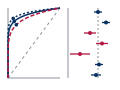
Table of contents by volume: Volume 1 (2026)